
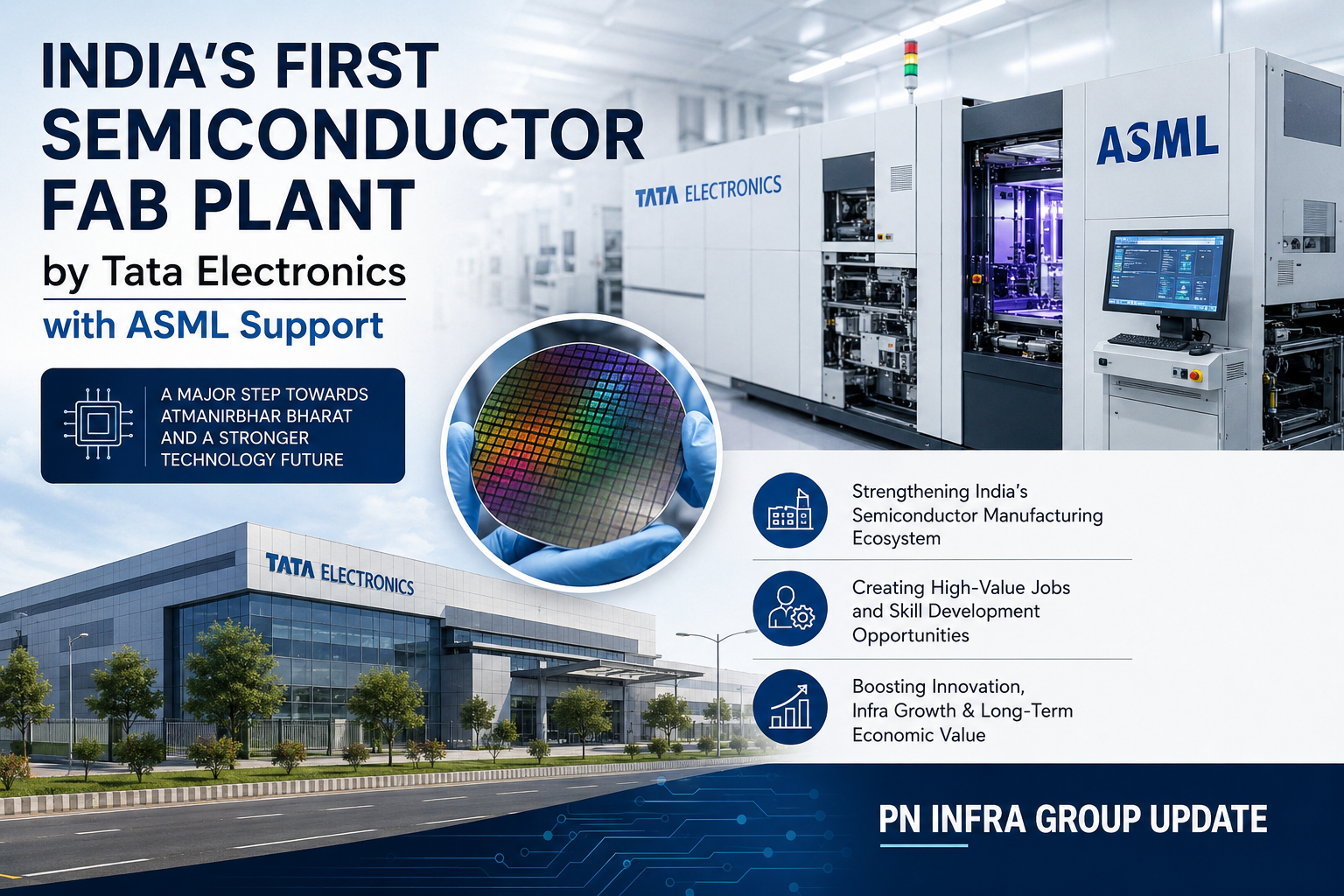

India’s First Dholera Semiconductor Fab Plant by Tata Electronics with ASML Support | PN Infra Group
India is entering a new phase of industrial growth through advanced semiconductor manufacturing. The announcement of India’s first semiconductor fabrication facility marks a major milestone for technology development, supply chain growth, and future manufacturing capabilities.
With Tata Electronics with ASML Support becoming a widely discussed development, the project reflects India’s long-term ambition to strengthen domestic chip production and reduce dependency on imports.
This update by PN Infra Group explores the significance of the project, its expected impact, and how it may shape future opportunities.
Tata Electronics with ASML Support and India’s Semiconductor Vision
India has been expanding efforts to build stronger technology infrastructure and advanced manufacturing capabilities. Semiconductor fabrication has remained one of the most important sectors because chips power nearly every modern industry.
The development of Tata Electronics with ASML Support represents a major step toward creating a stronger local ecosystem for semiconductor production.
A semiconductor fabrication plant is more than a manufacturing facility. It becomes a center for engineering, research, technical employment, and industrial growth.
The project aligns with broader efforts to position India as a destination for high value manufacturing and technological innovation.
Why Semiconductor Manufacturing Matters
Semiconductors are used across many industries and everyday products.
Examples include:
- Smartphones and communication devices
- Automotive electronics and smart vehicles
- Healthcare and industrial equipment
Demand continues to rise as digital transformation expands across global markets.
Building fabrication capacity within India may improve production flexibility and strengthen domestic capabilities.
Tata Electronics with ASML Support and the Role of Advanced Technology
A semiconductor fabrication facility depends on highly specialized processes and precision systems.
The development involving Tata Electronics with ASML Support highlights how advanced manufacturing requires collaboration, engineering expertise, and long term investment.
Modern fabrication plants require:
- High precision production environments
- Complex process control systems
- Continuous technology upgrades
Each stage contributes to producing reliable semiconductor components at scale.
Building a New Manufacturing Ecosystem
Semiconductor projects influence much more than chip production.
They often support growth in:
- Infrastructure development
- Engineering and technical services
- Supply chain expansion
As manufacturing capabilities increase, connected industries also receive opportunities for growth.
This creates stronger industrial networks and supports future innovation.
Expected Benefits for India
The establishment of advanced fabrication capacity may create lasting value across multiple sectors.
Greater Manufacturing Capability
Local fabrication can support domestic production goals and improve industrial readiness.
Employment and Skill Development
Large manufacturing projects create opportunities across engineering, operations, construction, and technical training.
Technology Advancement
Access to advanced manufacturing environments may encourage research and knowledge development.
These factors together support long term industrial progress.
How Tata Electronics with ASML Support Could Influence Future Industries
The impact of semiconductor manufacturing extends across many sectors.
Industries expected to benefit include electronics, mobility, automation, healthcare, and digital infrastructure.
As demand for smart technologies increases, semiconductor availability becomes increasingly important.
Developing local capabilities can support more consistent growth across these industries.
Infrastructure Requirements Behind Semiconductor Facilities
Creating fabrication facilities requires extensive planning and specialized infrastructure.
Key areas include:
- Stable utility systems
- Precision environmental controls
- Advanced facility engineering
Construction and operational standards must meet highly controlled requirements.
Such projects often become benchmarks for future industrial development.
The Long Term Economic Perspective
Semiconductor facilities generally operate with long planning horizons.
Their value is often measured not only by production output but also by ecosystem growth.
The expansion linked to Tata Electronics with ASML Support may encourage additional investment interest and strengthen India’s manufacturing reputation.
Long term outcomes often include stronger industrial capabilities and expanded technical expertise.
Opportunities Beyond Manufacturing
The growth of semiconductor infrastructure can support many connected activities.
Potential opportunities include:
- Technical education and workforce training
- Equipment maintenance and industrial services
- Research and process innovation
These supporting sectors can contribute to wider economic activity.
Growth in these areas often continues beyond initial facility development.
Challenges That Shape Semiconductor Success
Semiconductor manufacturing remains one of the most demanding industrial sectors.
Success depends on maintaining quality, operational consistency, and long term investment.
Important focus areas include:
- Skilled workforce availability
- Process precision
- Continuous infrastructure improvement
Addressing these areas helps strengthen overall project outcomes.
Tata Electronics with ASML Support and India’s Global Position
Global demand for semiconductor capacity continues to increase.
Countries investing in advanced manufacturing are working to improve resilience and strengthen supply chains.
The development of Tata Electronics with ASML Support reflects India’s intent to become part of this evolving industrial landscape.
Strong execution and continued capability building may help expand future opportunities.
What This Means for the Next Generation
Future industries will depend increasingly on semiconductor technology.
Young professionals entering engineering, manufacturing, and technical fields may find new pathways emerging through large scale industrial projects.
The development of fabrication capabilities can influence education, innovation, and industrial growth for years to come.
Conclusion
India’s first semiconductor fabrication initiative marks an important step in industrial transformation and advanced manufacturing development.
The emergence of Tata Electronics with ASML Support reflects growing ambitions to build stronger domestic capabilities and encourage long term technological progress.
As infrastructure, expertise, and manufacturing capacity continue to develop, this project may become a defining milestone in India’s future industrial journey.
Leave A Comment